 FIELD NOTES / GRENADA 2026
Ann-Marie Carroll connected marine conservation with the skills, partnerships and business support that communities need to benefit from a healthy ocean. Her examples from Blue Action Lab in The Bahamas ranged from queen conch mariculture and educational tourism to youth internships and support for emerging entrepreneurs.
Read the complete 22-slide Blue Action Lab deck, including Conservation Cove, queen conch mariculture, youth programmes and the proposed regional venture exchange.
Download the full presentation · PDF · 22 slides ↓Connect restoration with learning and livelihoods.
At Conservation Cove, Blue Action Lab works alongside coral and mangrove restoration partners. Ann-Marie described an educational visitor experience that brings those activities together, with options for hands-on learning and local artisan activities. The attraction is the conservation work itself, interpreted so that visitors can understand and participate in it.
Her queen conch example linked a controlled hatchery with training and the intention to support wild populations in protected areas. She also described research into conch pearls as a potential higher-value livelihood pathway. The pearl work remained experimental; it was an opportunity being tested, rather than an established business model to copy.
Build a pathway from interest to a viable business.
Blue Action Lab’s youth internships introduce students to marine science, restoration partners and environmental business ideas. A separate entrepreneurship programme works with people who already have a green or blue business concept, helping them develop business models, understand customers, validate a market and plan their finances.
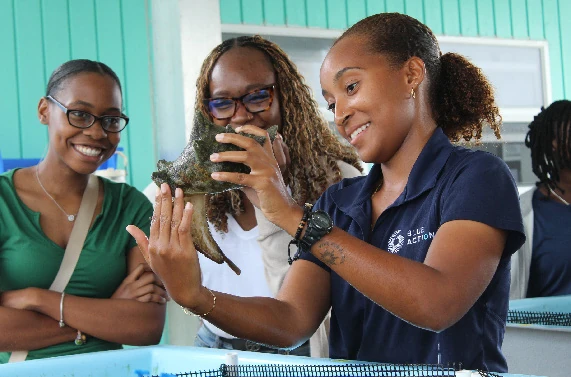
Ann-Marie emphasised pitching, communication, partnerships and pilot planning alongside technical knowledge. The aim is a progression from learning and small-scale testing towards ventures ready for further support and investment. She also introduced a proposed partnership with IDB Lab for a Caribbean blue economy venture exchange to connect business development, technical expertise, markets and financing.
Ask communities what is missing.
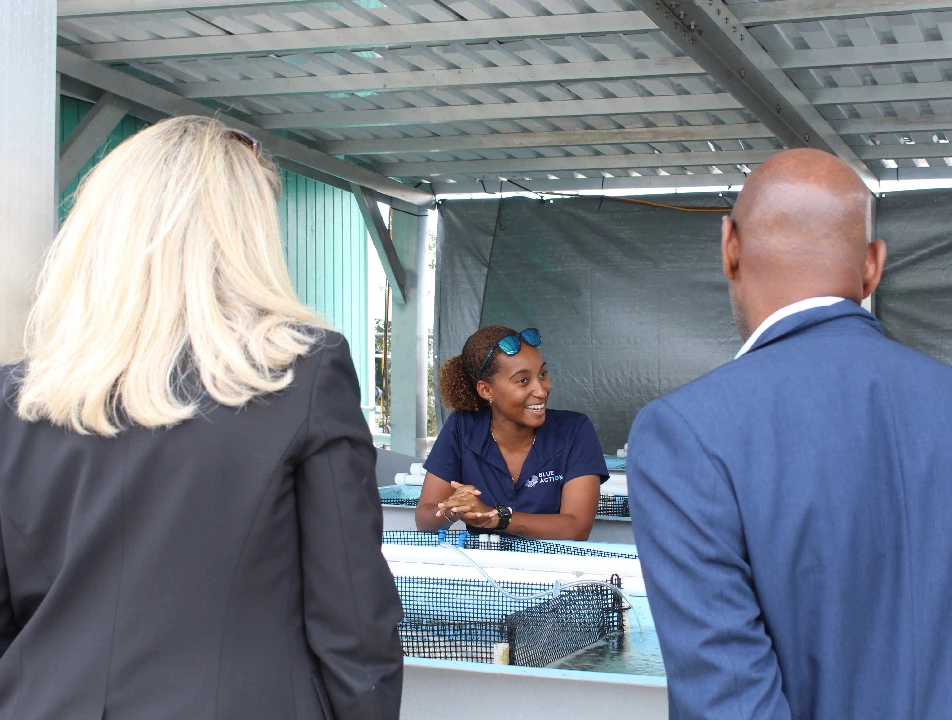
Interactive questions brought the room into the presentation. Participants identified mentorship, seed funding, technical support and training among the needs that could help turn local opportunities into sustainable livelihoods. Other responses pointed to market access, legislative gaps and the difficulty of obtaining start-up capital.
The conversation reinforced the value of listening before designing a programme. A promising ocean-based activity still needs people with the skills to deliver it, customers who value it and a realistic route through the barriers to implementation.
Keep the conservation questions open.
The discussion after the presentation asked how released conch would be monitored, how fishers and public authorities were involved, and how broodstock diversity and future pearl trade would be managed. Ann-Marie described existing relationships with fishers and government, and plans for tagging larger juvenile conch.
Those questions distinguish a promising pilot from a demonstrated conservation result. For MPA managers, the practical connection is to build monitoring, community relationships and the relevant permissions into an enterprise from the beginning.
Start with the community’s needs. Match training and finance to the stage of the venture. Track conservation benefits alongside business progress.
PRESENTATION / ANN-MARIE CARROLL
Explore the Blue Action Lab presentation
Browse all 22 slides on conservation, youth programmes and blue enterprise. Select any slide to enlarge it, then use Previous and Next or the arrow keys to move through the presentation.